01
1. Lunar Orbit Insertion
Mothership + Separation Module + Penetrators arrive at the Moon and inject into lunar orbit.
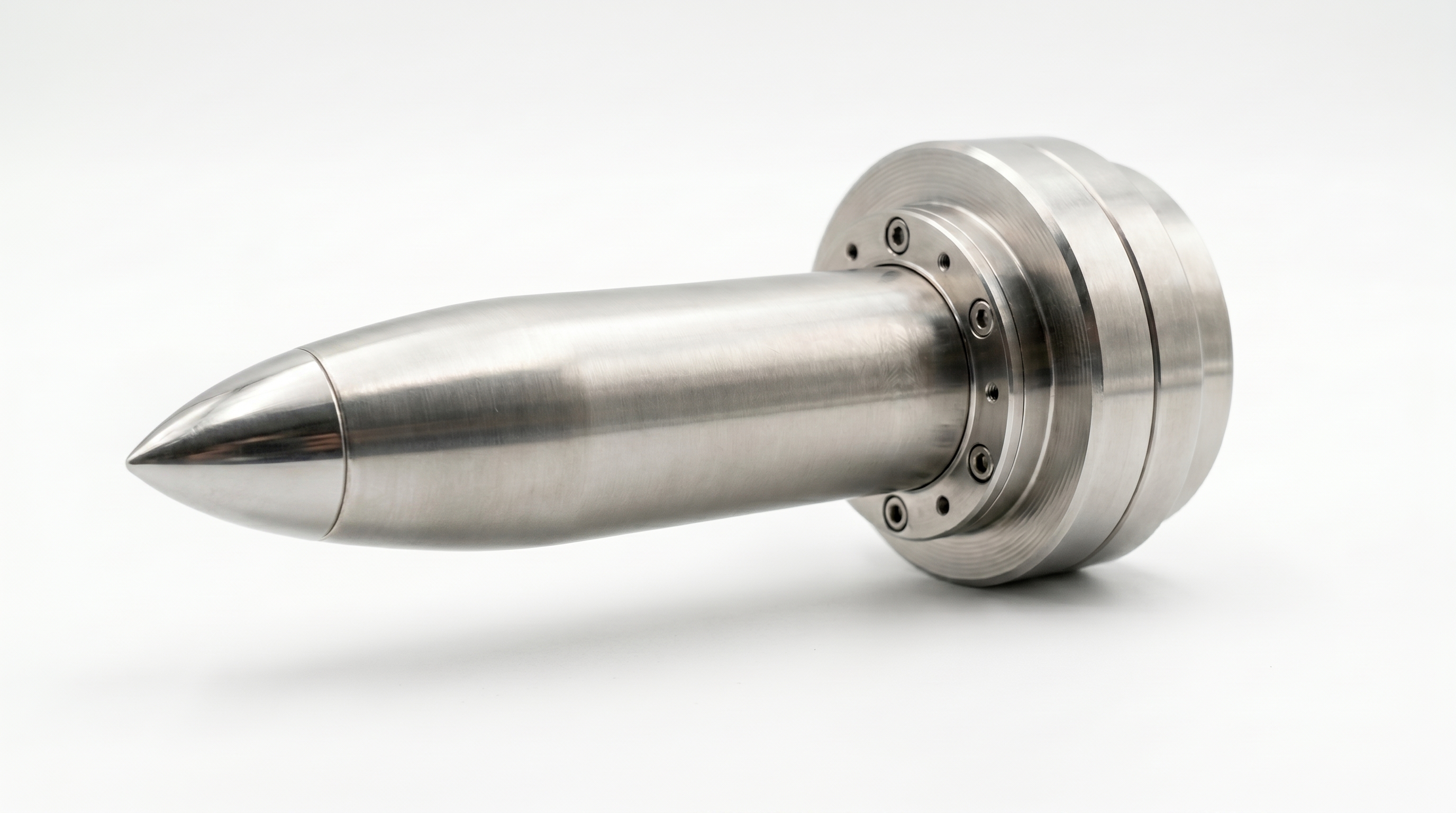
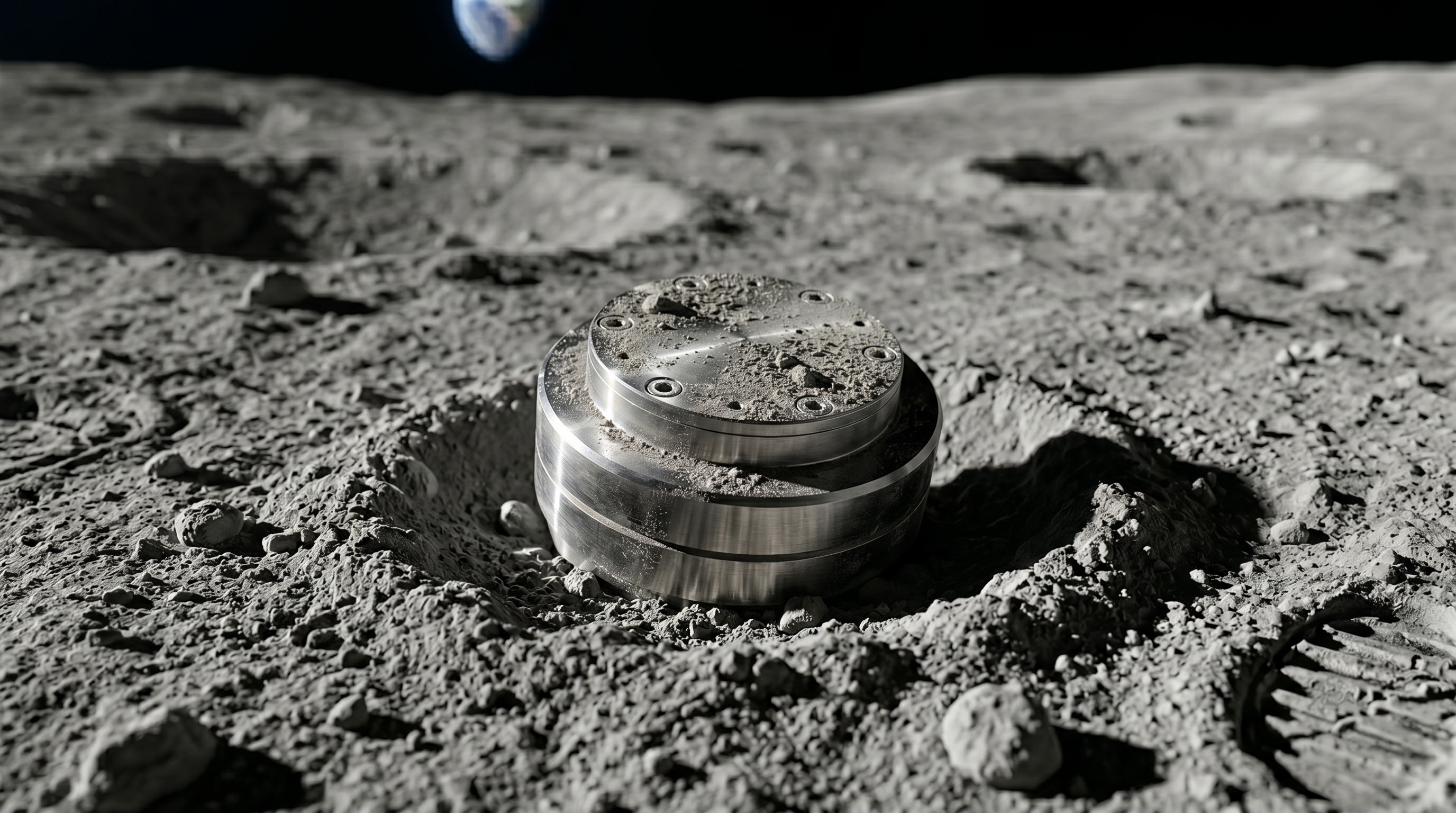
Science-grade penetrator with broadband seismometry and a surface-resident aft-body assembly. Day-side and PSR (permanently-shadowed region) variants.
| Class | Science-grade lunar penetrator |
|---|---|
| Mass / length | 12 kg-class / 100 cm — 70 cm forebody + 30 cm aft-body (design target) |
| Penetration depth | 1–5 m (design target) |
| Primary instrument | 3-axis broadband seismometer (in-house design) |
| Auxiliary sensing | Heat flow, dielectric, high-G accelerometer, gyro |
| Aft-body | Surface-resident comms / power assembly (solar array + 30–50 Wh Li-ion) |
| Operational life | 2 years (confirmation target) / 5 years (goal) |
| Variants | Day-side / PSR (primary-battery variant, 100–500 day life) |
| Status | Design phase (commercial deployment target) |
How a penetrator gets from orbit to subsurface — common to both Mini and Max.
Mothership + Separation Module + Penetrators arrive at the Moon and inject into lunar orbit.
The mothership settles into a ~100 km polar orbit and prepares observation systems.
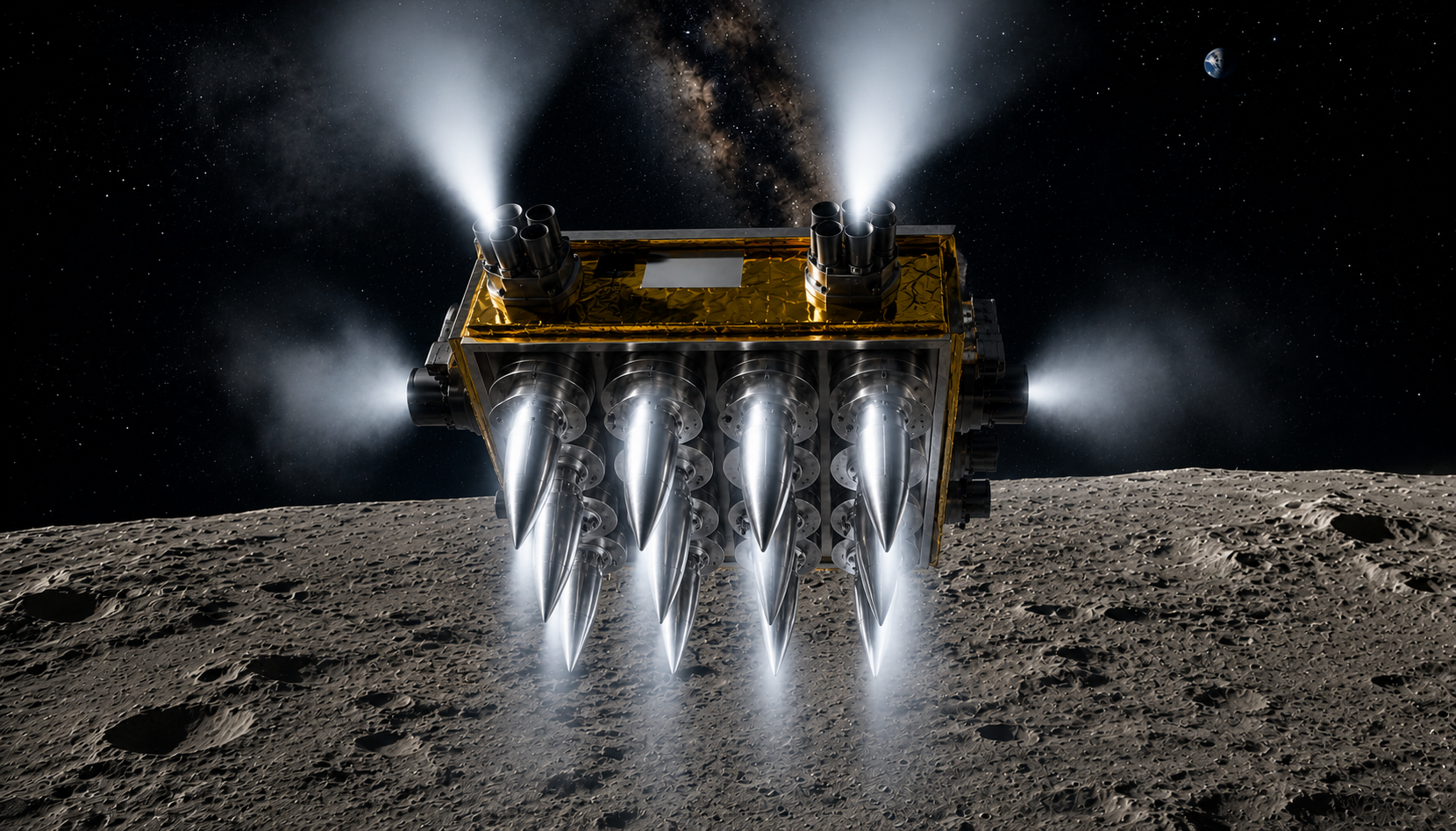
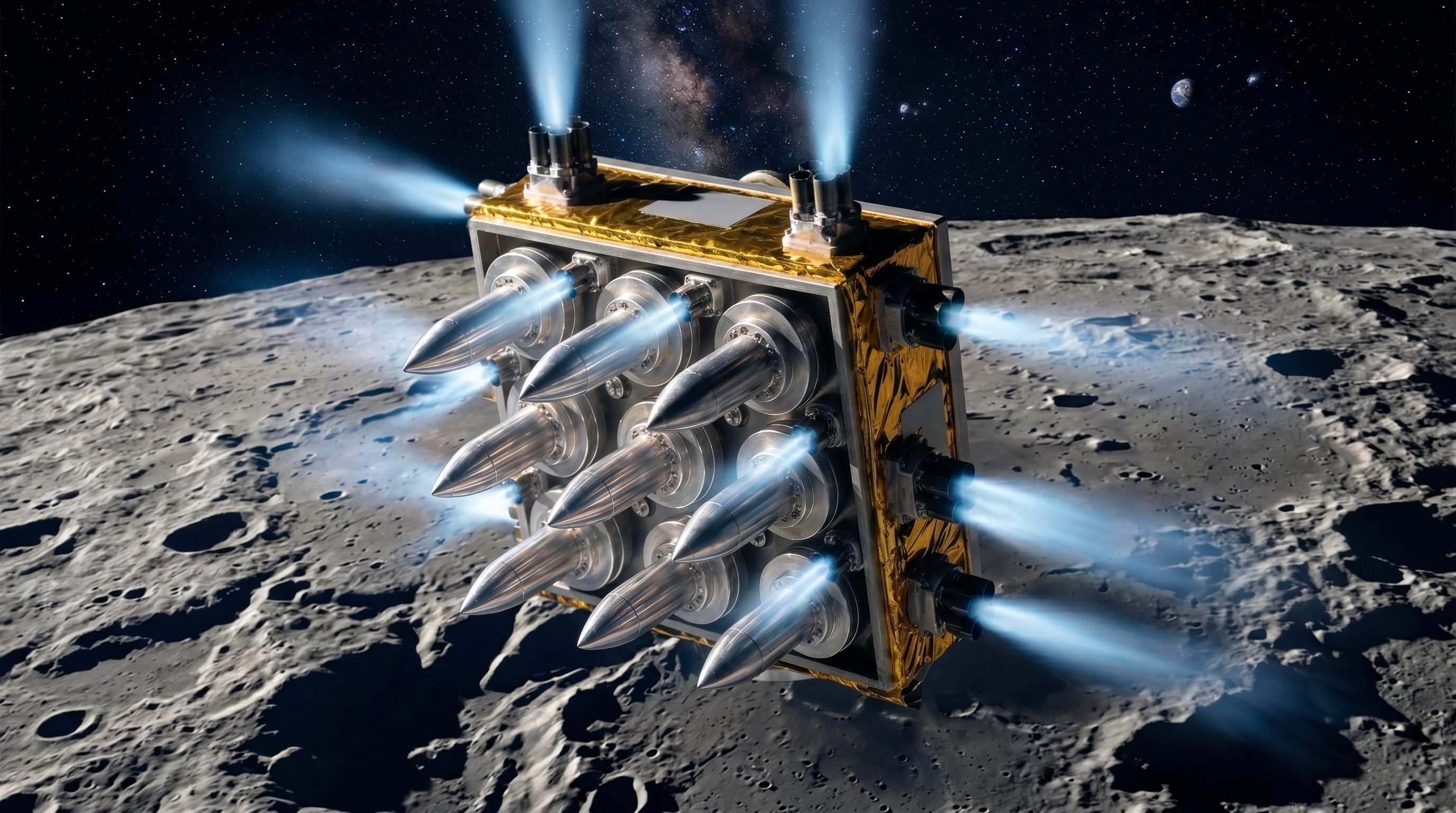
Separation modules are released — mini: 25 units × 4 modules / max: 3 units × 3 modules.
ΔV ≈ 1,900 m/s cancels horizontal velocity for vertical descent.
At ~7 km altitude, surface-relative velocity is driven near zero.
Free fall ~30 seconds, reaching an impact velocity of about 150 m/s.
Peak deceleration ≈ 10,000 G; the penetrator buries 1–5 m into the regolith.
The mothership relays terahertz / microwave / camera / penetrator data to Earth over 3–5 years.